
If you’ve ever looked under your car’s hood, you’ve probably noticed at least one belt. But when it comes to drive belts and timing belts, many drivers assume they’re the same thing.
A drive belt and a timing belt are completely different components with distinct jobs, locations, and replacement intervals. Below, I will explain in detail from multiple aspects.
Quick Comparison: Drive Belt vs. Timing Belt
| Feature | Drive Belt (Serpentine Belt) | Timing Belt |
|---|---|---|
| Function | Powers accessories like alternator, A/C, power steering | Synchronizes crankshaft and camshaft for valve timing |
| Location | Outside the engine, easily visible | Inside the engine, behind a protective cover |
| Possible faults | Loss of accessories, inconvenience | Engine damage (in interference engines) |
| Replacement Cost | Lower ($200–$400) | Higher ($500–$1,000+) |
What Does a Drive Belt Do?
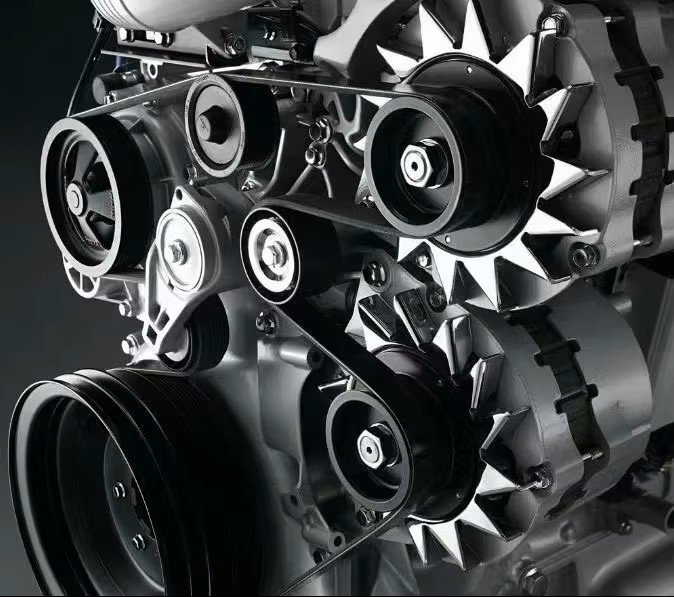
A drive belt (also called serpentine belt or accessory belt) is the long, winding rubber belt you can see on the front or side of your engine. Its job is to transfer power from the engine’s crankshaft to vital accessories like:
- The alternator (charges your battery)
- The power steering pump
- The air conditioning compressor
- The water pump (on some vehicles)
If your drive belt breaks, you’ll lose these accessories—but your engine will keep running.
What Does a Timing Belt Do?
A timing belt is hidden behind a protective cover and plays a much more critical role. It connects the crankshaft (bottom of engine) to the camshaft(s) (top of engine), ensuring the valves open and close at precisely the right moment relative to the pistons.
In interference engines (most cars), a broken timing belt allows pistons to smash into open valves, causing thousands of dollars in damage—often totaling the car.
When Should You Replace Each?
- Drive Belt: Inspect regularly; replace every 60,000–100,000 miles or if you see cracking, glazing, or hear squealing.
- Timing Belt: Follow your owner’s manual strictly—typically 60,000–100,000 miles or 5–7 years.

Looking forward to working with you
Mainly producing timing belts,air filters,oil filters.