
When you open the hood of a car, you may wonder: Why the timing belt instead of the chain? Although timing chains are widely popular for their reputation, timing belts are still the preferred choice for many engineers. Let’s explore why rubber often beats metal in this critical engine component.
Low noise
One of the most direct benefits of timing belts is reducing noise. Unlike metal chains, metal chains produce a unique clicking or clicking sound, especially during cold start when the timing belt runs relatively quietly. Rubber structures can suppress vibrations instead of transmitting them through the engine cylinder block, resulting in a smoother and more refined driving experience.
High efficiency
The timing belt is much lighter than the chain, which reduces the rotational mass (inertia) of the engine valve train. The reduction in parasitic drag loss power means better acceleration and higher fuel efficiency. For performance oriented engines, this weight advantage enables engineers to design more responsive power systems.
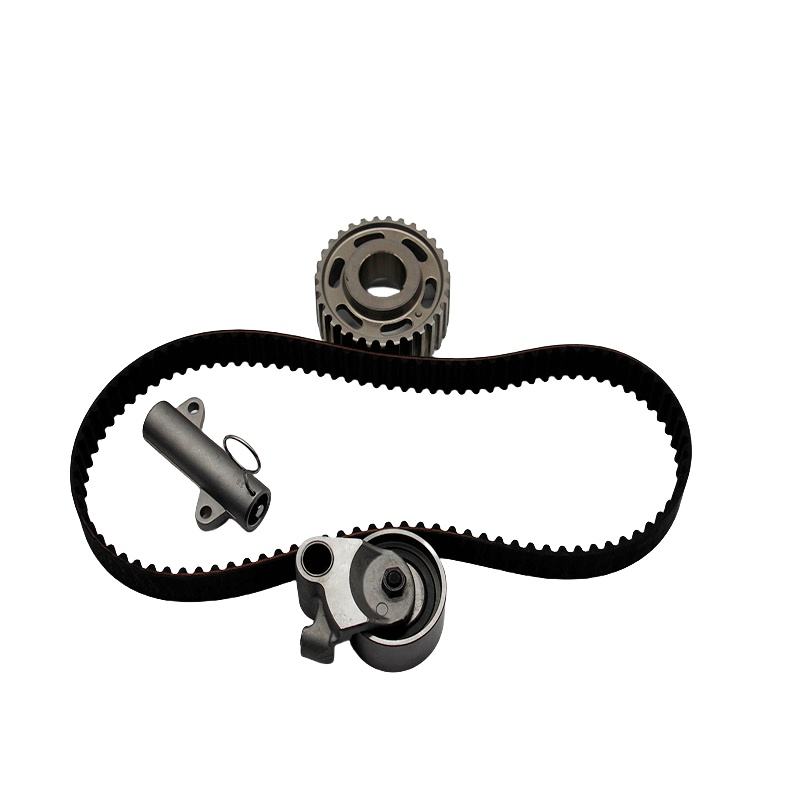
Low replacement cost
A complete timing belt replacement typically costs £ 300-500, while a chain replacement may cost £ 800-2000 or more. Due to the installation of the belts on the exterior of the engine, we can access them without large-scale disassembly, thereby saving labor costs.
Technological advantages
Many drivers mistakenly believe that timing belts are an ‘old technology’. In fact, modern belts use advanced materials such as Kevlar or high-temperature rubber reinforced with fiberglass. Many car models use timing belts, such as timing belt for l300,for innova diesel.
Predictable Maintenance
While a chain might stretch gradually over 150,000+ miles, it often gives little warning before failure. Belts follow predictable replacement intervals (typically 60,000-100,000 miles or 5-7 years), allowing owners to plan maintenance.

Looking forward to working with you
Mainly producing timing belts,air filters,oil filters.